All-Season vs. All-Weather vs. Winter Tires: What’s Best for New Hampshire Roads?
January 10, 2026
What Tires Are Right For My Vehicle?
New Hampshire winters have a personality all their own. One day it’s dry pavement, the next it’s snow-covered back roads, icy intersections, and freezing morning commutes. That’s why choosing the right tires isn’t just about convenience — it’s about safety, control, and confidence behind the wheel.
At Tires Too Auto Repair in Londonderry, NH, we’re often asked:
“Do I really need winter tires?”
“Aren’t all-season tires good enough?”
Let’s break down the real differences between All-Season, All-Weather, and Winter Tires, and how each performs during a true New Hampshire winter.
All-Season Tires: The Name Is a Little Misleading
Best for: Mild climates and three-season driving
All-season tires are designed to balance comfort, longevity, and performance in dry and wet conditions. They work well from spring through fall and are often the factory-installed tire on many vehicles.
Pros:
Smooth, quiet ride
Longer tread life
Good handling in dry and rainy conditions
Cons in NH Winter Conditions:
Rubber compounds harden in cold temperatures
Reduced traction on snow and ice
Longer stopping distances once temperatures drop below ~45°F
Bottom line:
All-season tires are a solid choice most of the year, but they are not designed for true winter driving. When snow, ice, and freezing temps arrive, their limitations show quickly.
All-Weather Tires: A True Year-Round Option
Best for: Drivers who want one tire year-round with better winter performance
All-weather tires are often confused with all-season tires, but they are very different. All-weather tires are engineered to perform in colder temperatures and carry the Three-Peak Mountain Snowflake (3PMSF) rating, meaning they meet industry standards for winter traction.
Pros:
Better grip in cold weather than all-season tires
Rated for snow traction
No need to swap tires seasonally
Cons:
Tread life is typically shorter than all-season tires
Not as capable as winter tires in deep snow or on ice
Bottom line:
All-weather tires are a great “middle ground” for New Hampshire drivers who want improved winter safety without the hassle of seasonal tire changes — especially if you mainly drive on plowed roads.
Winter Tires: Maximum Safety When It Matters Most
Best for: Serious winter driving, icy roads, and heavy snow
Winter tires are purpose-built for cold temperatures. Their rubber remains flexible in freezing conditions, and their tread patterns are designed to grip snow, slush, and ice far better than any other tire type.
Pros:
Superior traction on snow and ice
Shorter stopping distances
Best control in extreme cold
Cons:
Must be removed when temperatures warm up
Seasonal changeover required
Faster wear if used in warmer weather
Bottom line:
If you regularly drive during snowstorms, on untreated roads, or early morning commutes, winter tires provide the highest level of safety and confidence — no compromises.
Which Tire Is Right for You?
The best tire choice depends on:
Your daily driving habits
How much winter driving you do
Road conditions near your home and workplace
Your comfort level driving in snow and ice
That’s where professional guidance makes all the difference.
Trust the Tire Professionals at Tires Too Auto Repair
At Tires Too, we don’t believe in one-size-fits-all recommendations. Our Tire Professionals take the time to understand your vehicle, your driving patterns, and New Hampshire’s unique seasonal challenges before recommending the right tire solution.
Whether you’re deciding between all-weather tires or planning a dedicated winter tire setup, we’ll explain the pros and cons in plain language — and make sure your vehicle is prepared for whatever NH weather throws your way.
Tires Too Auto Repair
📍 Londonderry, NH
Serving Derry, Windham, Chester & Manchester
We don’t fix cars — we keep your life in seamless motion.
Discover top-notch hybrid & electric vehicle service at Tires Too Auto Repair in Londonderry, NH. Expert care for modern vehicles. Visit us today!

Tires and A Whole Lot More...
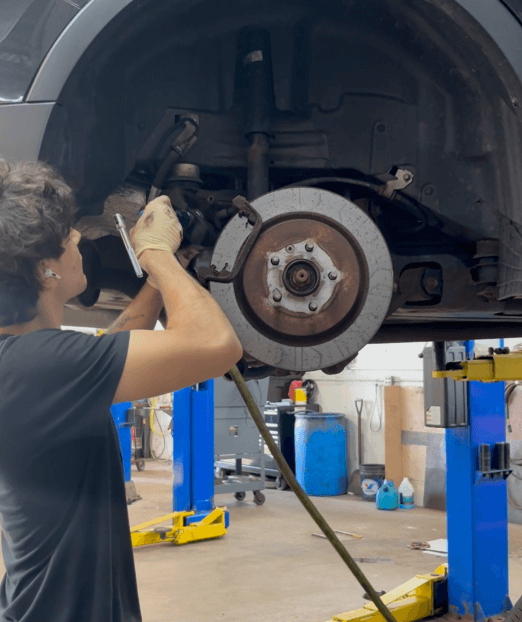
Why brake pad measurements matter
We Don’t Just Fix Cars — We Keep Your Life in Seamless Motion.
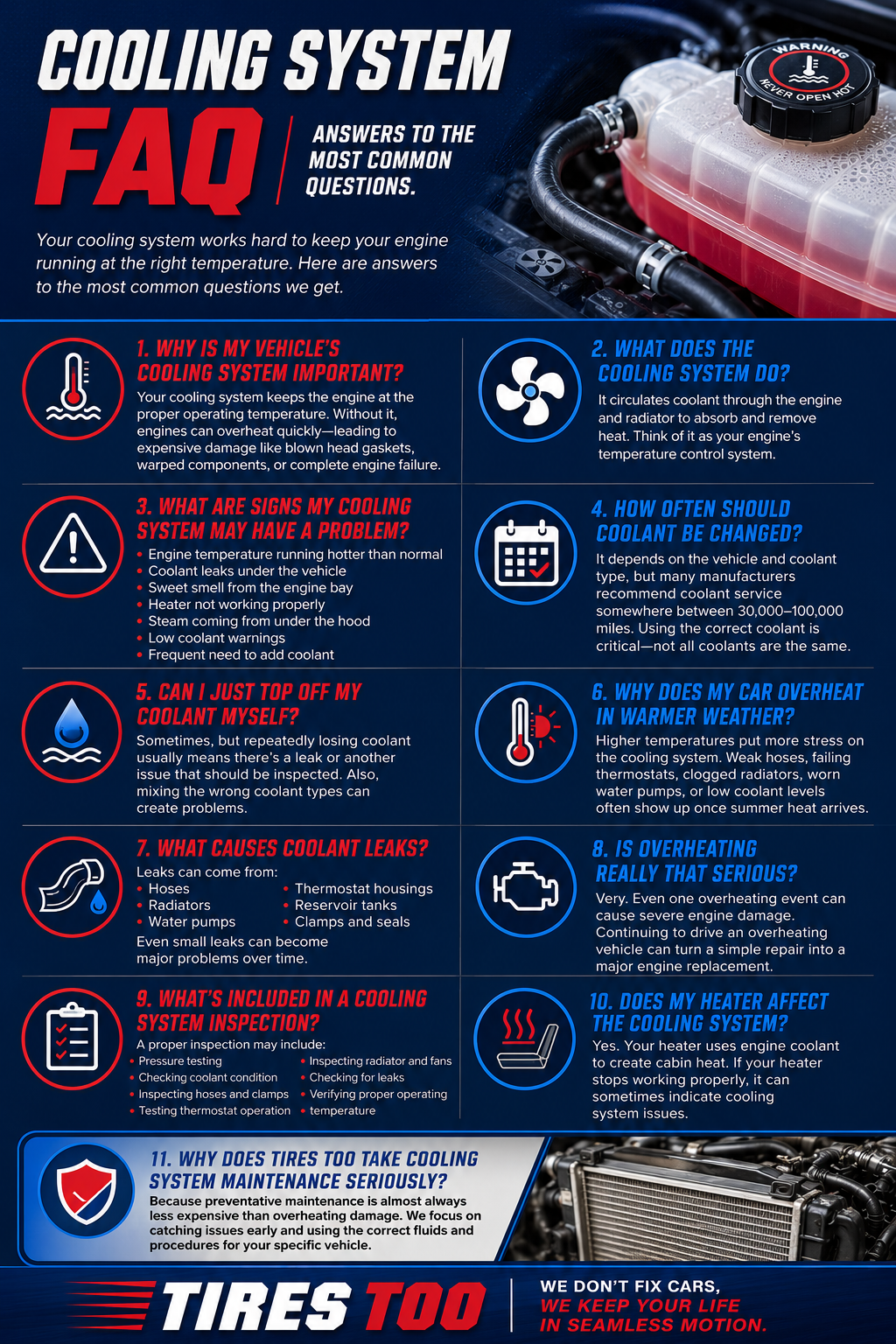
Simple to Check.....Expensive to Ignore
Get expert pre-purchase inspections at Tires Too Auto Repair in Londonderry, NH. Ensure your car purchase is wise. Schedule an online appointment now!

❄️ A/C System FAQ: What You Should Know Before It Gets Hot 1. Why isn’t my A/C blowing cold air? There are a few common reasons: Low refrigerant (often from a small leak) Weak compressor Electrical issues or sensors Cabin air filter restriction 👉 Bottom line: If it’s not cold, it’s not going to fix itself—and usually gets worse. 2. Does my A/C “use up” refrigerant over time? Nope. Your A/C system is sealed. If it’s low, there’s a leak somewhere. 👉 Topping it off without fixing the leak is like refilling a flat tire every week. 3. Why does my A/C smell bad when I turn it on? That musty smell is usually: Mold or bacteria buildup in the evaporator Moisture sitting in the system 👉 It’s common—and fixable with proper cleaning. 4. Why is my A/C cold when I’m driving, but not at a stop? This usually points to: Weak cooling fans Airflow issues through the condenser 👉 Your system needs airflow—no movement, no cooling. 5. Is it bad to run my A/C all the time? Not at all. In fact, running it regularly: Keeps seals lubricated Helps prevent leaks Keeps the system functioning properly 👉 Even in winter, it’s good to run it occasionally. 6. Why does my engine struggle when the A/C is on? Your A/C compressor puts extra load on the engine. If it feels excessive, it could mean: Compressor issues Engine performance problems 👉 A slight change is normal. A big one isn’t. 7. What’s that clicking or rattling noise when the A/C is on? Could be: Compressor clutch issues Loose components Internal compressor wear 👉 Noise is your early warning system—don’t ignore it. 8. How often should I service my A/C system? There’s no strict interval, but: Performance checks are smart before summer If it’s not as cold as it used to be, get it looked at early 👉 Preventative checks are cheaper than major repairs. 9. Why is water dripping under my car? Good news—this is usually normal. That’s just condensation from the A/C system. 👉 If it’s clear water, you’re fine. 10. Can I recharge my A/C myself with a store kit? You can… but it’s risky. Those kits: Don’t fix leaks Can overcharge the system Can cause bigger (expensive) problems 👉 Proper A/C service involves measuring, testing, and diagnosing—not guessing. 🔧 Final Thought: Your A/C system isn’t just about comfort—it’s about air quality, system health, and catching small issues before they turn into big ones. “Helping you stay cool, comfortable, and in seamless motion.”

**Here’s Why We Recommend What We Recommend (And Why It Matters More Than You Think)** If you’ve ever left an auto repair shop wondering, *“Do I really need that?”*—you’re not alone. It’s one of the most common questions drivers have, and honestly, it’s a fair one. At Tires Too, we believe you shouldn’t just take our word for it. You deserve to understand *why* we recommend what we do—because when you understand your vehicle, you make better decisions for it. So let’s pull back the curtain. --- ## It Starts With Your Vehicle—Not a Generic Checklist Every car, truck, and SUV is engineered with a specific set of standards. Fluid types, service intervals, component tolerances—they’re all carefully designed by the manufacturer. That’s why we don’t rely on “universal” maintenance schedules. Instead, we: * Reference manufacturer specifications * Use vehicle-specific fluids and parts * Follow service intervals designed for *your exact model* Because treating every vehicle the same is one of the fastest ways to shorten its lifespan. --- ## Your Driving Habits Change Everything Two identical vehicles can need very different maintenance—simply because they’re driven differently. Think about it: * Short trips vs. highway driving * Stop-and-go traffic vs. steady cruising * New England winters vs. mild conditions All of these impact wear, fluid breakdown, and component life. That’s why we ask questions and pay attention. Your daily routine tells us just as much as your mileage does. --- ## We Focus on Prevention—Not Reaction Here’s the truth most people don’t hear often enough: **It’s almost always cheaper (and easier) to maintain something than to repair it after it fails.** Preventative maintenance isn’t about doing more—it’s about doing the *right things at the right time*. For example: * Replacing worn fluids before they cause internal damage * Addressing small issues before they become major repairs * Keeping systems clean, lubricated, and operating efficiently It’s not about selling services—it’s about avoiding breakdowns, inconvenience, and costly surprises. --- ## We Don’t Do “Quick Fixes” You won’t find “quick oil changes” or one-size-fits-all services here. And that’s intentional. Quick services often prioritize speed over precision: * Incorrect or generic fluids * Skipped inspection steps * Missed early warning signs That might save a few minutes today—but it can cost you significantly down the road. We take a more thorough approach because your vehicle deserves more than a rushed job. --- ## Sometimes the Right Recommendation Is “No” This might surprise you—but sometimes we’ll tell you *not* to do something. If a service isn’t necessary yet, or doesn’t apply to your vehicle, we’ll say so. Because trust matters more than transactions. --- ## So What Does This Mean for You? It means when we recommend something, it’s based on: * Your vehicle’s engineering * Your real-world driving conditions * Long-term reliability—not short-term convenience And it means you’ll always get a clear explanation if you want one. --- ## You Should Never Feel in the Dark At the end of the day, this is your vehicle—and your investment. You deserve to: * Understand what’s being recommended * Know why it matters * Feel confident in the decisions you make So if you ever have a question, ask. We’re always happy to walk you through the “why.” --- **Tires Too** *We don’t fix cars, we keep your life in seamless motion.*
Discover the benefits of Advance Driver Assist Systems at Tires Too Auto Repair in Londonderry, NH. Expert automotive care for safer driving. Visit us today!