Pot Hole Season

Russ Hilliard • March 7, 2026
Graphics Effect | Tires Too Auto Repair

πŸ•³οΈ Ah yes… New Hampshire’s fifth season: Pothole Season.


# What Potholes Do to Your Car (And Why Alignment Matters in New Hampshire)

Every spring in New Hampshire, drivers experience the same seasonal tradition: **potholes.**

Between freezing temperatures, thawing pavement, and heavy traffic, roads across Londonderry, Derry, Windham, and Manchester can quickly become rough on vehicles. What might feel like a quick bump in the road can actually cause **serious damage to your vehicle’s steering, suspension, and alignment.**

At **Tires Too in Londonderry**, we see the effects of pothole damage every spring — and the good news is most issues can be corrected quickly if caught early.

---

# Why Potholes Are So Common in New Hampshire

New Hampshire roads go through constant **freeze-thaw cycles** during late winter and early spring.

Here's what happens:

1. Water seeps into cracks in the pavement
2. Overnight temperatures freeze the water, expanding the pavement
3. Warmer daytime temperatures thaw the ice
4. Traffic breaks the weakened pavement apart

The result? **Potholes that appear almost overnight.**

And unfortunately, your vehicle’s suspension often absorbs the impact.

---

# What Happens to Your Car When You Hit a Pothole

When your vehicle drops into a pothole, several components can be affected instantly.

Common issues we see include:

* **Wheel alignment knocked out of specification**
* **Bent or damaged suspension components**
* **Worn ball joints or tie rods**
* **Wheel or tire damage**
* **Steering system stress**

Even if the vehicle still drives normally, the alignment may already be slightly off.

Over time this can lead to **premature tire wear and handling problems.**

---

# Signs a Pothole May Have Damaged Your Alignment

Many drivers don’t realize their alignment has changed until the symptoms become obvious.

Watch for these signs:

* Your **steering wheel is crooked** when driving straight
* The vehicle **pulls left or right**
* Tires begin **wearing unevenly**
* The car **feels unstable at highway speeds**
* Steering feels **looser than normal**

If you notice any of these after hitting a pothole, it’s worth having the alignment checked.

---

# Why Professional Wheel Alignment Matters

Wheel alignment isn’t just about straightening the steering wheel.

Proper alignment ensures:

* Tires contact the road correctly
* Steering responds accurately
* Tires wear evenly
* Suspension components last longer
* Vehicle safety systems function properly

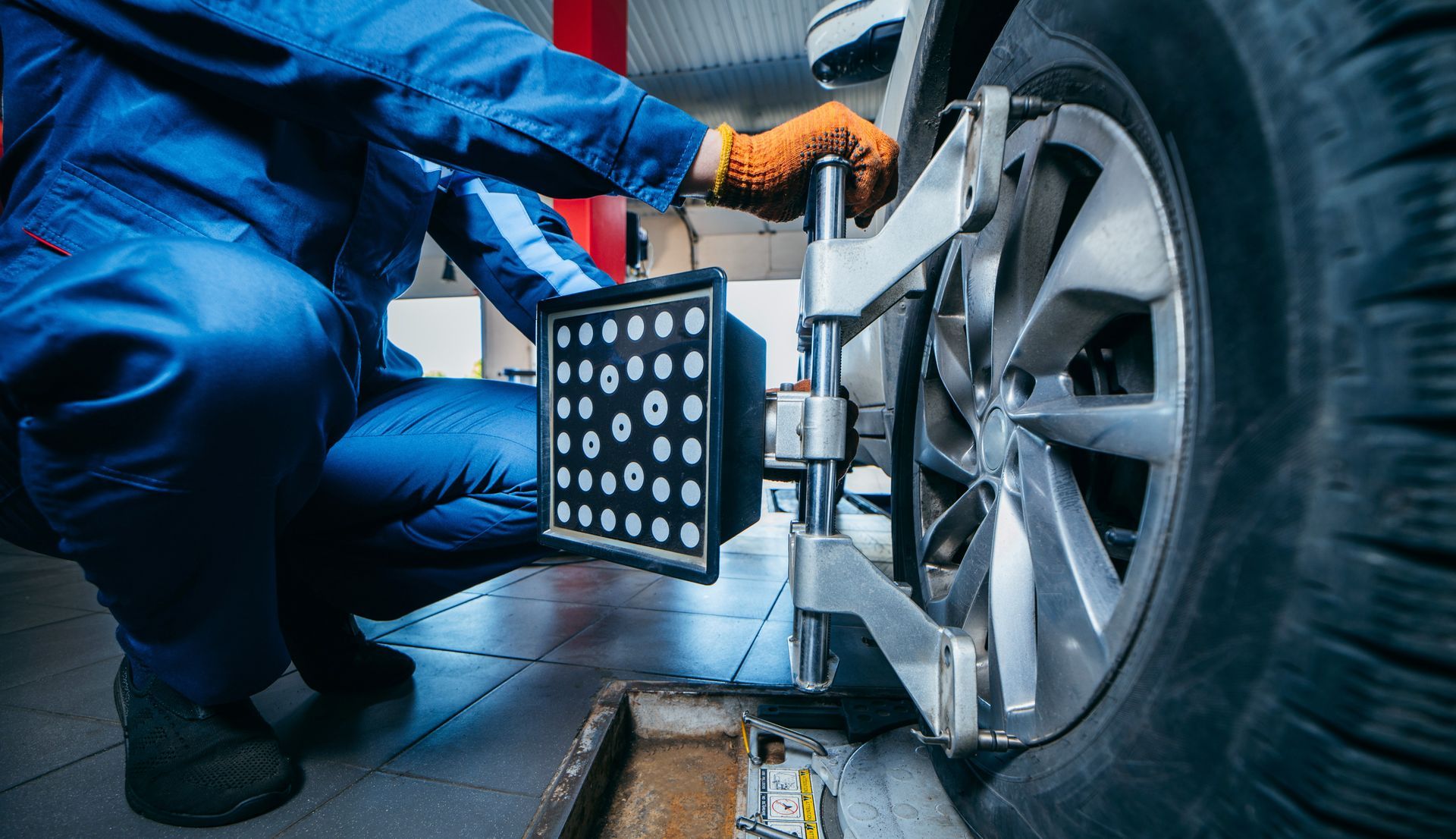
At **Tires Too**, we use **Hunter alignment technology**, one of the most advanced alignment systems available today.

Hunter systems allow our technicians to measure alignment angles with **extreme precision**, ensuring your vehicle is restored to factory specifications.

---

# Modern Vehicles May Also Need ADAS Calibration

Many newer vehicles include **Advanced Driver Assistance Systems (ADAS)** such as:

* Lane Keep Assist
* Adaptive Cruise Control
* Automatic Emergency Braking
* Collision Warning Systems
* Lane Departure Warning

These systems rely on **precise vehicle geometry** to function properly.

When a vehicle’s alignment changes, it can sometimes affect how these systems interpret the road.

That’s why **ADAS calibration may be required after certain suspension or alignment repairs**.

At **Tires Too**, our technicians have the tools and expertise to properly calibrate these systems when necessary, helping ensure your vehicle’s safety technology performs exactly as designed.

---

# Preventing Long-Term Damage from Potholes

While potholes are unavoidable in New England, catching damage early can prevent larger repairs later.

If you hit a pothole:

1. Pay attention to how the vehicle drives afterward
2. Watch for changes in steering or tire wear
3. Schedule an alignment inspection if something feels off

A quick inspection can often prevent **hundreds of dollars in tire replacement costs later.**

---

# Wheel Alignment and Suspension Repair in Londonderry, NH

If you suspect pothole damage or your vehicle simply isn’t driving the way it should, the team at **Tires Too** is here to help.

We provide:

* Professional **Hunter wheel alignments**
* Steering and suspension inspections
* **ADAS system calibration**
* Honest diagnostics and clear recommendations

Serving drivers from **Londonderry, Derry, Windham, Chester, and Manchester, NH**, we focus on doing the job right the first time.

Because at Tires Too, **we don’t fix cars — we keep your life in seamless motion.**

---

# Frequently Asked Questions About Pothole Damage

### Can hitting a pothole damage my alignment?

Yes. Even a single pothole impact can knock your wheel alignment out of specification.

### How do I know if my alignment is off?

Common signs include pulling to one side, a crooked steering wheel, uneven tire wear, or unstable handling.

### Is pothole damage expensive to repair?

In many cases, correcting the alignment is relatively inexpensive if addressed early. Waiting too long can lead to tire damage or suspension repairs.

### Do modern vehicles need ADAS calibration after alignment?

Some vehicles do. If your vehicle has advanced driver-assistance systems, calibration may be required to ensure those safety features operate correctly.

---

## Schedule an Alignment Inspection

If a New Hampshire pothole caught you by surprise this spring, let the team at **Tires Too in Londonderry** take a look.

A quick inspection today can prevent bigger problems tomorrow.


By Tires Too Auto Repair March 2, 2026
Discover expert insights on vehicle alignment at Tires Too Auto Repair in Londonderry, NH. Ensure a smooth ride and extend tire life. Schedule an online appointment now!
By Russ Hilliard February 14, 2026
What is the current status of the NH State Vehicle Inspection Program? As of February 13, 2026, the New Hampshire Department of Safety has suspended the State’s mandatory vehicle inspection program until further notice. Can Tires Too perform State inspections or issue inspection stickers? No. Licensed inspection stations are not authorized to perform State-mandated inspections or issue State inspection stickers at this time. Why was the program suspended? Following recent court rulings and the State’s inability to continue its inspection vendor contract, the Department of Safety has suspended the program while legal and administrative matters are addressed. Do I need to do anything right now? At this time, State-mandated inspections are paused. We recommend staying informed as guidance may change. What if my inspection sticker is expired? The State inspection program is currently suspended. We are awaiting further direction from the Department of Safety regarding enforcement or future requirements. Can I still have my vehicle checked for safety? Absolutely. Even though State inspections are paused, your vehicle’s safety remains important. Tires Too continues to offer: Comprehensive vehicle safety checks Emissions and diagnostic services Brake, suspension, tire, and steering inspections Preventative maintenance services Will inspections return? The situation is still evolving. The State has indicated that legal proceedings are ongoing, and guidance may change. We will share updates as soon as they are available.
By Tires Too Auto Repair February 2, 2026
Optimize your vehicle's performance with expert oil change services at Tires Too Auto Repair in Londonderry, NH. Visit us today for reliable car care!
By Russ Hilliard January 30, 2026
The body content of your post goes here. To edit this text, click on it and delete this default text and start typing your own or paste your own from a different source.
By Tires Too Auto Repair January 29, 2026
Discover expert tire and wheel care at Tires Too Auto Repair in Londonderry, NH. Enhance performance and safety. Visit us today!
By Russ Hilliard January 25, 2026
A Spicy Truth Before We Start 🌢️ If stopping your car were optional, we’d all be driving on $20 brake pads. But since brakes are the one system on your vehicle whose entire job is keeping you alive, this is one of those times where cheaper doesn’t mean smarter — it just means cheaper. We hear it all the time at Tires Too: “I can buy brake pads online for $20. Why is a brake job $750?” Fair question. On the surface, both options involve… well… brake pads. But that’s kind of like asking why a frozen pizza costs $4 and dinner at a great restaurant costs $40. They’re both technically pizza — but the experience, quality, and outcome are very different. Let’s break it down. What You Get for $20: Just Brake Pads When you buy bargain brake pads online or at a big-box store, you’re usually getting: Pads only (no hardware, no resurfacing, no inspection) Unknown quality materials (often harder compounds that wear faster or make noise) No warranty if they squeal, shake, or chew up your rotors No safety check of the rest of the braking system And most importantly… No one installing them correctly unless you’re a trained technician with the right tools Brake pads don’t stop your car by themselves. They rely on rotors, calipers, brake fluid, slide pins, shims, sensors, and proper torque specs — all working together. What You Get at Tires Too: A Complete Brake System Service When Tires Too performs a brake job, you’re not buying “pads.” You’re investing in safe, reliable stopping power. Here’s what that includes: πŸ”§ Professional Diagnosis We inspect the entire brake system, not just the pads We check rotors, calipers, hoses, hardware, fluid condition, and wear patterns We confirm why your brakes need service — not just that they do 🧱 High-Quality Parts Vehicle-specific brake pads designed for quiet operation, long life, and proper stopping performance New hardware kits to prevent noise and uneven wear Rotors that are resurfaced or replaced to meet factory specifications πŸ›  Skilled Installation Performed by trained technicians who do this every day Proper cleaning, lubrication, and torque procedures Electronic parking brake service (when required) Road testing to ensure everything feels right πŸ§ͺ Safety & Longevity Checks Brake fluid condition checked (and flushed if needed) Caliper movement verified Slide pins serviced to prevent premature failure πŸ›‘ Warranty & Peace of Mind Warranty-backed parts and labor If there’s noise, vibration, or a concern — we take care of it No guessing. No second-guessing. No YouTube tutorials at midnight. The Hidden Cost of Cheap Brake Jobs That $20 set of pads can quickly turn into: $400 rotors ruined by poor-quality friction material Squealing, grinding, or pulsation Uneven braking or longer stopping distances Redoing the job… properly… later Brakes are not the place to experiment. So Why the Price Difference? The $750 brake job isn’t just about parts. You’re paying for: Experience Accountability Correct tools and equipment Time spent doing it right Your safety — and everyone else’s on the road At Tires Too, we don’t fix cars. We keep your life in seamless motion. And when it comes to brakes, that means making sure your vehicle stops the way it was engineered to — every time. Still Have Questions? If you’re comparing options or want to understand exactly what your vehicle needs, stop by or give us a call. We’re always happy to explain — no pressure, no jargon, just honest answers. Tires Too Londonderry, NH FAQ: Brake Jobs, Pricing, and Safety (Straight Answers) Why does a brake job cost $600–$900? A professional brake job includes more than pads. At Tires Too, pricing reflects a full system inspection, high-quality vehicle-specific parts, precision installation, rotor service, safety checks, and a warranty. You’re paying for reliability, safety, and work done right the first time. Can I bring my own brake pads to Tires Too? No. We do not install customer-supplied brake parts. Here’s why: We can’t verify the quality, fitment, or safety of parts purchased elsewhere Many low-cost pads don’t meet factory specifications Customer-supplied parts don’t allow us to offer a warranty Mixing unknown parts with professional labor increases the risk of noise, vibration, premature wear, or brake failure To stand behind our work — and protect your safety — we only use parts we trust and can warranty. Are cheap brake pads dangerous? They can be. Low-quality pads may increase stopping distance, create excessive noise, wear out rotors faster, or overheat. Brakes are a safety system, not a convenience item. What’s included in a Tires Too brake service? Our brake services typically include system inspection, premium pads and hardware, rotor resurfacing or replacement to spec, proper lubrication and torque procedures, road testing, and warranty-backed parts and labor. How long do professional brake jobs last? With quality parts and proper installation, most brake jobs last significantly longer and perform more consistently than bargain installations — often saving money over time. Local Brake Repair You Can Trust in Londonderry, NH Tires Too proudly provides professional brake repair and maintenance for drivers in Londonderry, Derry, Windham, Chester, and Manchester, NH. Our focus isn’t speed or shortcuts — it’s doing the job correctly so you can drive with confidence. If you’re searching for brake repair near me, brake replacement Londonderry NH, or trusted brake service in southern New Hampshire, we’re here to help. $20 Brake Pads vs $600–$900 Brake Job | Tires Too Londonderry NH Why cheap brake pads aren’t the same as a professional brake job. Learn what’s included in a $600–$900 brake service at Tires Too in Londonderry, NH — safety, quality, and peace of mind.
By Russ Hilliard January 24, 2026
# Do I Really Need ADAS Calibration? ### What Today’s Safety Systems Need You to Know Modern vehicles are smarter than ever. Features like lane departure warning, adaptive cruise control, blind spot monitoring, and automatic emergency braking all fall under one umbrella: **ADAS — Advanced Driver Assistance Systems**. These systems are designed to help keep you safe. But what many drivers don’t realize is that **ADAS systems rely on precise calibration** to work correctly — and even small changes to your vehicle can affect them. Let’s break it down in plain English. --- ## What Is ADAS Calibration? ADAS systems use **cameras, radar, and sensors** to “see” the road. Calibration is the process of making sure those sensors are **aimed and measuring exactly as the manufacturer intended**. Think of it like getting your eyes checked. You might still be able to see without glasses — but that doesn’t mean you’re seeing *accurately*. --- ## When Do ADAS Systems Need Calibration? Here’s where most people are surprised. Calibration isn’t just needed after an accident. You may need ADAS calibration if you’ve had: * A **windshield replacement** (especially for lane departure or forward cameras) * A **wheel alignment** * **New tires** or a change in tire size * **Suspension work** or ride height changes * **Body work**, bumper repairs, or repainting * A **side mirror repair or replacement** * A **minor impact**, even if there’s no visible damage In short: if something changes the way your vehicle sits, steers, or “looks” at the road — calibration may be required. --- ## “But There’s No Warning Light…” That’s a common misconception. Many ADAS systems **do not turn on a warning light** when they’re slightly out of calibration. Instead, they may: * Detect vehicles too late (or too early) * Misjudge lane markings * Apply braking or steering at the wrong moment * Miss vehicles in blind spot monitoring The system may still work — just not *correctly*. --- ## Is ADAS Calibration Maintenance? ADAS calibration isn’t a routine maintenance item like an oil change, but it **is part of proper vehicle service** when certain repairs or adjustments are made. Skipping calibration can mean: * Reduced safety * Increased liability * Systems that don’t perform as designed in an emergency When it comes to safety systems, “close enough” isn’t good enough. --- ## Why ADAS Calibration Matters These systems are designed to assist **real-world driving decisions** — braking, steering, warning you of hazards. If they’re even slightly off, they may not respond the way the engineers intended. At Tires Too, our philosophy has always been simple: > **We don’t fix cars — we keep your life in seamless motion.** That includes making sure the technology meant to protect you is doing its job properly. --- ## Not Sure If Your Vehicle Needs Calibration? That’s okay — most drivers aren’t. If you’ve had recent repairs, tire or alignment work, or notice your ADAS features behaving differently, it’s worth asking the question. We’re always happy to explain what your vehicle needs — and just as importantly, **why**. Because when it comes to safety, clarity matters. ---
By Russ Hilliard January 18, 2026
🚨 Top 5 Dashboard Lights You Should Never Ignore Your dashboard has more warning lights than a New Hampshire winter has potholes. Some are friendly reminders. Others are your car politely (or not so politely) asking for help. Here are the Top 5 dashboard warning lights you should never ignore—and what they’re trying to tell you. 1️⃣ Check Engine Light (The Most Famous, and Most Misunderstood) This little engine-shaped icon can mean many things, ranging from “your gas cap is loose” to “hey… something important is going on.” Common causes include: Faulty sensors Emissions issues Engine performance problems Loose or damaged gas cap πŸ”§ Good to know: Just because your car is still driving doesn’t mean everything is okay. Ignoring the check engine light can lead to reduced fuel economy—or bigger repairs down the road. 2️⃣ Brake Warning Light (This One’s a Big Deal) If the brake warning light comes on, your vehicle may be telling you: Brake fluid is low Brake pads are worn There’s an issue with the braking system πŸš— Why it matters: Your brakes are your vehicle’s most important safety system. If this light stays on, it’s time to get things checked—promptly. 3️⃣ Temperature Warning Light (When Your Engine Is Feeling the Heat) This light usually means your engine is overheating, often due to: Low coolant Cooling system leaks Thermostat or water pump issues πŸ”₯ Pro tip: If this light comes on, continuing to drive can cause serious engine damage. Pull over safely and let the vehicle cool down before calling for advice. 4️⃣ Battery / Charging System Light (Not Just a Battery Problem) This light doesn’t always mean you need a new battery. It can also indicate: Alternator problems Failing voltage regulator Loose or damaged wiring ⚑ Why ignoring it is risky: Once the charging system stops working, your car will eventually shut off—and it won’t restart without repairs. 5️⃣ ABS or Traction Control Light (Your Safety Tech Is Taking a Time-Out) These lights indicate an issue with systems designed to help you maintain control during sudden stops or slippery conditions. Common causes include: Faulty wheel speed sensors Brake system issues Electrical problems ❄️ Especially important in NH: These systems are critical for winter driving and emergency maneuvers. What Should You Do When a Warning Light Comes On? First—don’t panic. Second—don’t ignore it. Modern vehicles store detailed information that helps technicians pinpoint the problem quickly and accurately. At Tires Too in Londonderry, NH, we use professional-grade diagnostic equipment to identify the root cause of warning lights—so you’re not guessing or replacing parts you don’t need. Frequently Asked Questions (AEO-Friendly) Can I drive with a dashboard warning light on? Sometimes—but it depends on the light. Safety and temperature warnings should be checked immediately. Will clearing the light fix the problem? No. Clearing a light only resets the warning. If the issue remains, the light will return. How long does diagnostics take? Most diagnostic evaluations can be completed within the same day. When in Doubt, Get It Checked Your dashboard lights exist for a reason—and listening to them early often saves time, money, and stress later. πŸ“ Tires Too – Londonderry, NH πŸ“ž Schedule a diagnostic evaluation today We don’t fix cars—we keep your life in seamless motion.
By Russ Hilliard January 18, 2026
Hearing a strange noise from your car can instantly trigger worst-case scenarios. Is it the transmission? The engine? Your entire savings account? Take a breath. Not every noise means a major repair. In fact, many of the most alarming sounds we hear at Tires Too Auto Repair in Londonderry, NH turn out to be minor issues with simple fixes. Here are the top five “scary-sounding” car noises that are usually not as bad as they seem. 1. Morning Squeal from the Belts That loud squeal right after startup—especially on a cold New Hampshire morning—is extremely common. What’s happening: Cold temperatures make rubber belts stiff and less flexible. When the engine starts, the belt may slip briefly until it warms up. Good news: In many cases, a belt adjustment or replacement solves the problem quickly. It’s rarely an emergency—but it is something you don’t want to ignore forever. 2. Loud Brake Squeak Backing Out of Your Driveway You step on the brakes first thing in the morning and… screeeech. What’s happening: Overnight moisture, light surface rust, and road salt buildup are common in NH. That thin rust layer gets scraped off the first time you brake. Good news: If the noise disappears after a few stops, it’s usually completely normal. Persistent noise, grinding, or vibration is when it’s time to have the brakes inspected. 3. Clicking or Popping When Turning This one tends to get people’s attention fast. What’s happening: Yes, clicking can indicate a CV axle issue—but often it’s something much simpler, like loose trim, a rock stuck in a splash shield, or plastic components flexing in cold weather. Good news: Many clicking noises are inexpensive fixes once the cause is identified. A quick inspection can save a lot of unnecessary worry. 4. Rattle at Idle or While Driving Slowly Rattles are annoying—and they always sound worse than they are. What’s happening: Heat shields, exhaust hangers, and plastic under-car panels are notorious for loosening over time and making themselves known. Good news: These repairs are often straightforward and affordable. In fact, rattles fall into the “cheap fix” category more often than not. 5. Whirring or Humming from the Rear of the Vehicle Many drivers assume this noise means a failing wheel bearing—and sometimes it does. But not always. What’s happening: Tire cupping, uneven tire wear, low air pressure, or AWD system maintenance needs can all create humming or droning sounds. Good news: The fix may be as simple as tire service or routine maintenance—not a major component replacement. When a Noise Does Need Attention While many noises are harmless, new, persistent, or worsening sounds should always be checked. Ignoring them can turn a small issue into an expensive one. That’s why at Tires Too Auto Repair in Londonderry, we focus on identifying the real cause—not guessing, not upselling. Our Digital Courtesy Inspection helps us spot issues early, explain what’s normal, and show you exactly what needs attention (and what doesn’t). Hearing a noise that’s making you nervous? Let us turn that “uh-oh” sound into a simple solution—and help keep your car (and your wallet) happy. Tires Too Auto Repair – Londonderry, NH We don’t fix cars. We keep your life in seamless motion. Frequently Asked Questions About Car Noises Why is my car making noise but driving fine? Many car noises come from non-critical components like belts, heat shields, brakes, or plastic panels. These parts can make noticeable sounds without affecting how the vehicle drives, especially in cold or wet conditions. Are car noises worse in cold weather? Yes. Cold temperatures cause rubber, metal, and plastic components to stiffen and contract. This often leads to squeaks, rattles, or clicks that disappear once the vehicle warms up. When should I worry about a noise coming from my car? You should have your car inspected if the noise is: Getting louder or more frequent Accompanied by warning lights Felt through the steering wheel or brake pedal Affecting performance, braking, or steering Is it safe to drive if my car is making a squeaking or rattling noise? In many cases, yes—but it depends on the source. Brake noise, steering-related sounds, or grinding should always be checked promptly to avoid safety risks or additional damage. Why does my car make noise only when I first start it? Startup noises are commonly caused by cold belts, exhaust components, or surface rust on brake rotors. These noises usually fade as the engine and components warm up. Can tires cause humming or droning noises? Yes. Uneven tire wear, low tire pressure, or tire cupping can create humming or whirring sounds that are often mistaken for wheel bearing failure. How do mechanics diagnose car noises? Technicians combine test drives, visual inspections, and hands-on checks of suspension, brakes, exhaust, and drivetrain components. At Tires Too, we use our Digital Courtesy Inspection to document findings and explain them clearly. What should I do if I hear a new noise in my car? Schedule an inspection sooner rather than later. Catching a small issue early can prevent expensive repairs down the road and give you peace of mind.
See all blogs >